

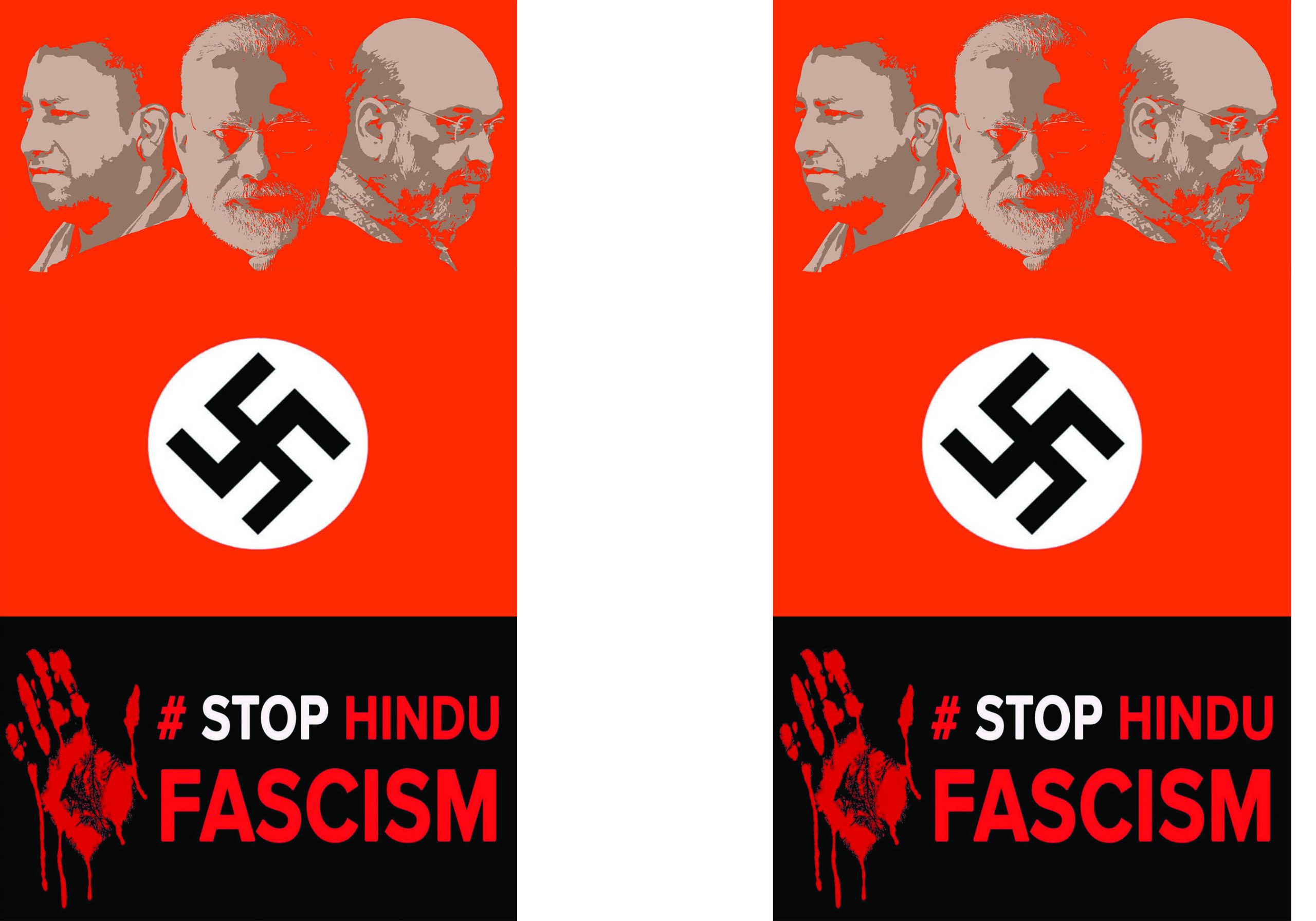
Elisabeth Eide & Terje Skaufjord,
Oslo Norway
[Translated from the original in Norwegian. Though for the Indian audience it may be mundane knowledge, and not even too accurate, we are publishing this article to indicate how even in a country like Norway people are standing against the Hindutva agenda in far away India]
On January 22 the Modi-govermment will inaugurate their Ram Mandir, built on the ruins of a mosque in Ayodhya. The celebration of this extremely destructive and communal act committed by the RSS-activists and BJP-followers in 1992, with the total destruction of the Babrij mosque in Ayodhya, is also a loud and disturbing hindu-nationalist opening of the election campaign just before the May general election.
What is at stake now in the most populous country of the world is the very fabric of India as a secular state. Combining the construction of an enormous temple to the popular Hindu god, Ram, with adjacent new highways and railway stations with the hindu-nationalist BJP-gospel for the coming general election smells of crude communalism.
As early as in 1949 activists from the early hindu nationalist organization, Hindu Mahasabha, managed to question the strength of the secularity of the Nehru-government, by entering the Babri mosque and supposedly leaving behind hindu religous effigies. The Uttar Pradesh Congress party chief minister with the support of the government sealed off the mosque and the area around it. They didn´t dare to say anything like:- “Here is a mosque, please stay away. Avoid communal acts that can destroy our common secularism.” They remained silent.
Thus Babrij Masjid remained closed until the Bharat Janata Party, established in 1980, together with the whole RSS-family, brought the Babri Masjid/Ram temple-issue back on the political agenda. This culminanted on the 6. of December 1992 when their vigilantes within a few hours totally destroyed and tore down every brick of the Babrij Masjid in Ayodhya.
From the successful ceremony on Jan 22 2024 in Ayodhya Prime minister Narendra Modhi and the BJPs will travel on with his well planned election campaign. Most probably Modi will be reelected as Prime minister for the third time at the end of May.
The Congress Party on their side, are caught in a very awkward and defensive position. The ruling party in India for the better part of the countrys first 40 years, are far behind the BJP. Joining the BJP-dominated Ram-celebrations in Ayodhya was out of the question, but being negative to the event hailing the popular god Ram, would not go down well with many of Indias Hindus. Congress ended up saying no to the invitation from Uttar Pradesh´ BJP-Chief minister Yogi Adityanath on the basis that religious belief is a private matter.
In spite of being far behind the BJP, documented with the bitter losses in recent state elections in Madhya Pradesh, Rajastan and Chhitisgarh, the Congress party had great hopes with the establishment of the INDI-Allience (Indian National Developmental Inclusive Alliance) encompasing close to 30 national and regional parties in front of the elections in May. But events later have revealed the weaknesses of this coalition. One of the most important alliance partners Nitish Kumar in Bihar not only left the INDIA, but joined the BJP-coalition NDA (National Democratic Alliance). Other important alliance partners have left or are about to leave. Congress’s´ role as a far too dominant alliance convener has become a major problem.
Things are going well for Mr. Modi. With economic growth and international success he might win even more convincingly than in 2019. The Congress is again on the back burner a few months before the general elections and secularism is not an issue that Congress candidates like to raise these days. Apparently some of them advocate a distance to secularism. Many important regional parties are also secular historically. But right now the BJP faces very few obstacles in changing India into a nation where secularism will only be a memory from the past.
 admin
admin