

Kobad Ghandy
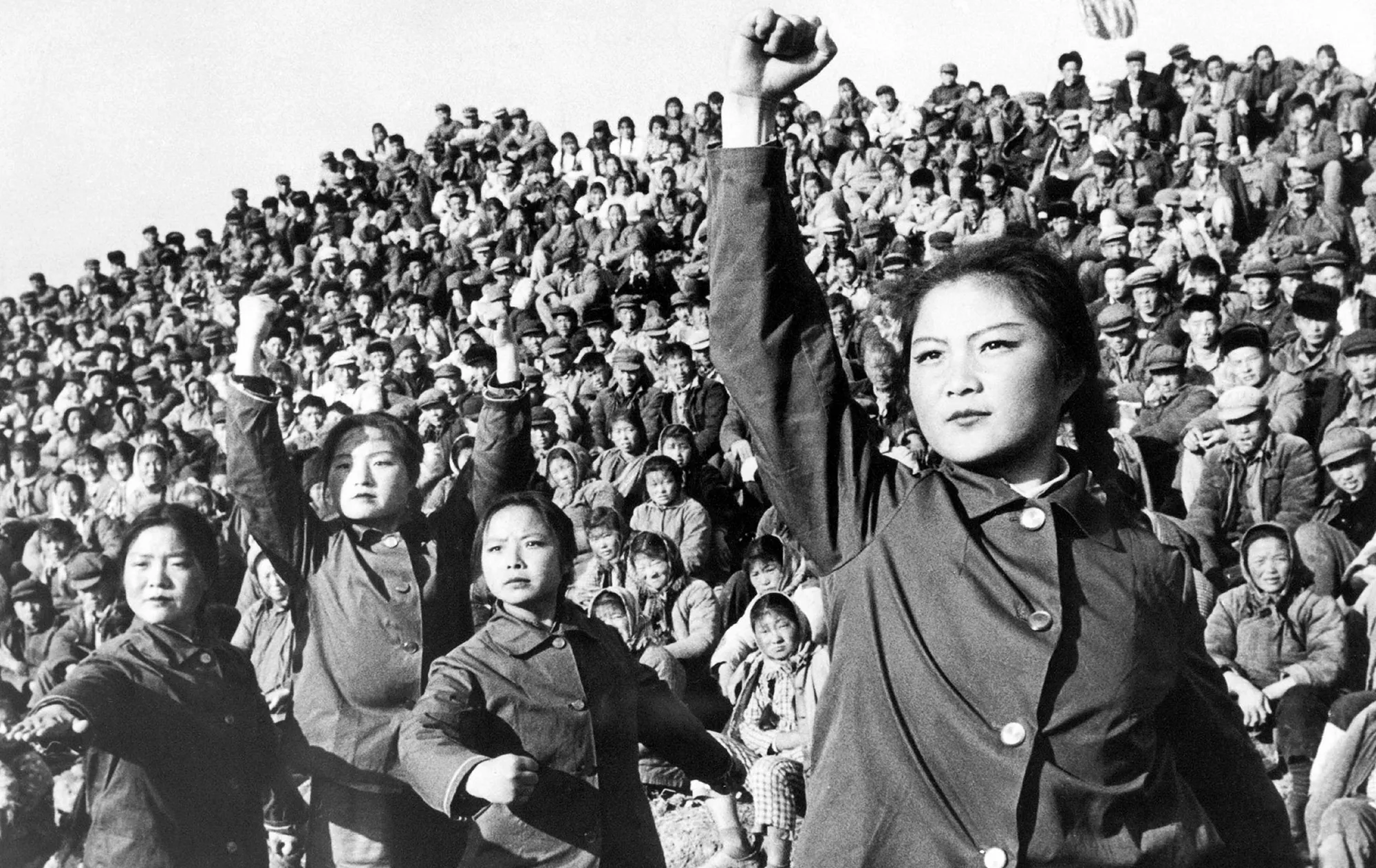
There is no question of changing society without changing ourselves. We are born into this society and brought up with all the prevailing values existing. After all the values of the ruling classes are the prevailing values of society. It is relatively easy to acquire Marxist/proletarian ideology; it is enormously more difficult to change ourselves in that image. Many think it is an automatic process but imagine the Chinese had to unleash the Cultural Revolution decades after the actual revolution was over when they found that their own party cadres and even leadership were getting corrupted with bourgeois ideology. In fact power was so corrupting that Mao had to give the call to “bombard the headquarters”.
And here I am not talking of changing ourselves in isolation from society; in fact, that is not possible – it is only in the course of changing the world that we can change ourselves. But often we comrades don’t give sufficient attention to this and only focus on the practical needs of the movement – it is such an approach that finally results in revisionism. Our superior knowledge and organizational skills tend to go to our head, and we lose whatever proletarian consciousness we may have gained. Even with small successes we tend to get egotistical and begin dominating others.
The cultural revolution sought to rectify just that. It sought to find means of trying to reform/educate cadres who had gone astray from Marxism, and the method they adopted was through physical labour and criticism. The fact that Deng was able to restore capitalism even after the CR, raises the question whether the methods adopted were correct or whether the rot had already gone too deep to be effectively corrected. I am under the impression that the CR tried its best but capitalist restoration was such a strong trend that even that was not sufficient to counter it.
In a country like India where not only are bourgeois values of individualism rife, but feudal values of Brahminism deep rooted in all strata of society, particularly the middle classes; the task of remolding the individuals is ever more difficult, but also essential.
As I said in an earlier article “No Freedom Without Values” —–“one may evolve the most democratic organizational structures, but if the individuals within it (particularly the leadership) do not have a proper set of values, any organization, whatever the form, is bound to get distorted and become autocratic.” In that same article I further add that “ if the question of a proper value system is so fundamental to a future just order, how would one define the terms good/virtuous and its opposite…..”.
While in China the CR was post the revolution, in India one will have to consider its principles right now to counter the deep seated Brahminical values present even in comrades. In the same article above I have outlined what constitutes ‘good’ and what ‘evil’. This has been reproduced in the book “Questions of Freedom and People’s Emancipation”.
Concepts of the CR need to be woven into the ongoing class struggle in the country. Some important aspects are: all comrades (male and female) must involve in manual labour (particularly those from middle class backgrounds), male members should share the tasks of household work and should not perpetuate old patriarchal values in practice, in the name of doing more important (political) work; strict discipline must be maintained and comrades should set time-bound tasks which should be checked up regularly; time should not be wasted on mobile, net, etc but in meeting goals; if living as a group comrades should involve in PT every day. There must be no confusion between a PR and a Full timer; all full timers may not necessarily be PRs as it depends on their level of involvement and discipline in meeting deadlines and tasks set. Such full timers that lack this sense of discipline and political commitment are not to be considered as professional revolutionaries.
If all other aspects are equal, Dalits and mahilas should be given preference in promotion to leadership positions.
These are some of the concepts of the CR as applied to the Indian condition. These need to be implemented in all groups that consider themselves revolutionary. As without PRs and a proper dynamic leadership, movements will just mark time and not advance – like a rocking horse going back and forth, but not advancing. Particularly when there is no upsurge this lethargy tends to creep in and we look at our activities as some sort of routine – particularly if we have no outside force to push us forward. This routinism is the biggest enemy of the revolutionary movement and often the state has just to sit back and watch the movement liquidate itself; not disturbing the applecart. In fact repression can help draw lines between the revolutionaries and liberals; while without out it the line tends to get diffused. Intellectuals living comfortable lives pose as revolutionaries through mere rhetoric. The minimum that must be demanded from such comrades is integration with the basic masses (workers and peasants) in their area of work.
Also, such fields of work, and forms of struggle, should be chosen where the breakthrough could be the fastest. Extensive quantitative development (in time or space) without a revolutionary leap will result in economism and revisionism setting in. Also, reformist trends will tend to eat into the vitals of not only the movement but also the very comrades leading it.
We must constantly be experimenting with new forms to be more effective in our daily political tasks. We should never be satisfied with the existing speed of progress. Besides we must find methods to dupe the state and/or make a network that will facilitate going underground at a moment’s notice. This entails working/organizing in a scientific manner and not with liberalism.