

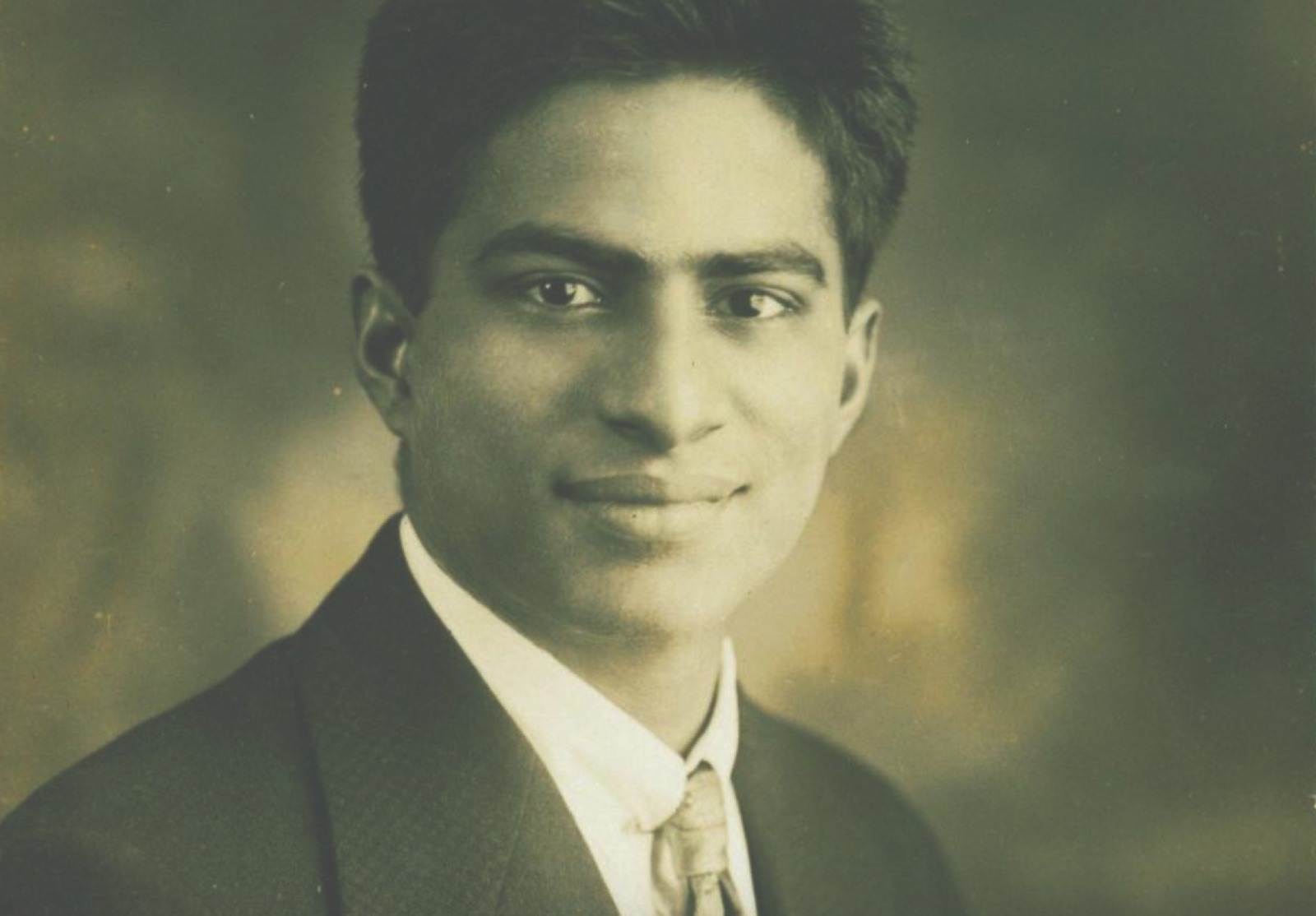
Article By Kobad Gandhy
“Only in science planned for the benefit of all mankind, not for bacteriological, atomic, psychological, or other mass warfare can the scientist be really free.”
July 31 2024 is the 117th birth anniversary of DD. Kosambi. Prof Kosambi was born on 31st July 1907 at Kosben in Portuguese Goa into a Saraswat Brahmin family to Dharmananda Damodar Kosambi. His father was the world-renowned Buddhist scholar. Acharya Dharmananda Damodar Kosambi, had studied its literature in the Pali language and was from Sankwal, Mormugao, Goa.
Damodar Dharmananda Kosambi was an Indianpolymath with interests in mathematics, statistics, philology, history, and genetics. He contributed to genetics by introducing the Kosambi map function. In statistics, he was the first person to develop orthogonal infinite series expressions for stochastic processes via the Kosambi–Karhunen–Loève theorem. He is also well known for his work in numismatics and for compiling critical editions of ancient Sanskrit texts. His father, Dharmananda Damodar Kosambi, had studied ancient Indian texts with a particular emphasis on Buddhism and its literature in the Pali language. Damodar Kosambi emulated him by developing a keen interest in his country’s ancient history.
After a few years of schooling in India, in 1918, Damodar and his elder sister, Manik travelled to Cambridge, Massachusetts with their father, who had taken up a teaching position at the Cambridge Latin School.Their father was tasked by Professor Charles Rockwell Lanman of Harvard University to complete compiling a critical edition of Visuddhimagga, a book on Buddhist philosophy, which was originally started by Henry Clarke Warren. There, the young Damodar spent a year in a Grammar school and then was admitted to the Cambridge High and Latin School in 1920. He became a member of the Cambridge branch of American Boy Scouts.
It was in Cambridge that he befriended another prodigy of the time, Norbert Wiener, whose father Leo Wiener was the elder Kosambi’s colleague at Harvard University. Kosambi excelled in his final school examination and was one of the few candidates who was exempt on the basis of merit from necessarily passing an entrance examination, essential at the time, to gain admission to Harvard University. He enrolled in Harvard in 1924, but eventually postponed his studies, and returned to India. He stayed with his father who was now working in the Gujarat University, and was in the close circles of Mahatma Gandhi.
In 1929, Harvard awarded him the Bachelor of Arts degree with a summa cum laude. He was also granted membership to the esteemed Phi Beta Kappa Society, the oldest undergraduate honours organisation in the United States. He returned to India soon after He obtained the post of professor at the Banaras Hindu University (BHU), teaching German alongside mathematics. He struggled to pursue his research on his own, and published his first research paper, “Precessions of an Elliptic Orbit” in the Indian Journal of Physics in 1930.
In 1931, Kosambi married Nalini from the wealthy Madgaonkar family. It was in this year that he was hired by mathematician André Weil, then Professor of Mathematics at Aligarh Muslim University, to the post of lectureship in mathematics at Aligarh. His other colleagues at Aligarh included Tirukkannapuram Vijayaraghavan. During his two years stay in Aligarh, he produced eight research papers in the general area of Differential Geometry and Path Spaces. His fluency in several European languages allowed him to publish some of his early papers in French, Italian and German journals in their respective languages.
In 1932, he joined the Deccan Education Society’s Fergusson College in Pune, where he taught mathematics for 14 years. In 1935, his eldest daughter, Maya was born, while in 1939, the youngest, Meera.
In 1944 he published a small article of 4 pages titled The Estimation of Map Distance from Recombination Values in Annals of Eugenics, in which he introduced what later came to be known as Kosambi map function. One of the most important contributions of Kosambi to statistics is the widely known technique called proper orthogonal decomposition (POD). Although it was originally developed by Kosambi in 1943, it is now referred to as the Karhunen–Loève expansion. In the 1943 paper entitled ‘Statistics in Function Space’ presented in the Journal of the Indian Mathematical Society, Kosambi presented the Proper Orthogonal Decomposition some years before Karhunen (1945) and Loeve (1948). This tool has found application to such diverse fields as image processing, signal processing, data compression, oceanography, chemical engineering and fluid mechanics.
Until 1939, Kosambi was almost exclusively focused on mathematical research, but later, he gradually started foraying into social sciences. It was his studies in numismatics that initiated him into the field of historical research. He did extensive research in difficult science of numismatics. His evaluation of data was by modern statistical methods. For example, he statistically analyzed the weight of thousands of punch-marked coins from different Indian museums to establish their chronological sequence and put forward his theories about the economic conditions under which these coins could have been minted.
He made a thorough study of Sanskrit and ancient literature, and he started his classic work on the ancient poet Bhartṛhari. He published exemplary critical editions of Bhartrihari’s Śatakatraya and Subhashitas during 1945–1948. It was during this period that he started his political activism, coming close to the radical streams in the ongoing Independence movement, especially the Communist Party of India. He became an outspoken Marxist and wrote some political articles.
In the 1940s, Homi J. Bhabha invited Kosambi to join the Tata Institute of Fundamental Research (TIFR) as chair for mathematics in 1946, and held the position for the next 16 years. Finally in 1964 he was appointed Scientist Emeritus by the Council for Scientific and Industrial Research and affiliated himself to the Maharashtra Association for the Cultivation of Science at Pune.
He continued to live in his own house in Pune, and commute to Mumbai every day by the Deccan Queen train.
After independence, in 1948–49, he was sent to England and to the US as a UNESCO Fellow to study the theoretical and technical aspects of computing machines. In London, he started his long-lasting friendship with Indologist and historian A.L. Basham. In the spring semester of 1949, he was a visiting professor of geometry in the Mathematics Department at the University of Chicago, where his colleague from his Harvard days, Marshall Harvey Stone, was the chair. In April–May 1949, he spent nearly two months at the Institute for Advanced Study in Princeton, New Jersey, discussing with such illustrious physicists and mathematicians as J. Robert Oppenheimer, Hermann Weyl, John von Neumann, Marston Morse, Oswald Veblen and Carl Ludwig Siegel amongst others.
After his return to India, in the Cold War circumstances, he was increasingly drawn into the World Peace Movement and served as a Member of the World Peace Council. He became a tireless crusader for peace, campaigning against the nuclearisation of the world. Kosambi’s solution to India’s energy needs was in sharp conflict with the ambitions of the Indian ruling class. He proposed alternative energy sources, like solar power. His activism in the peace movement took him to Beijing, Helsinki and Moscow. However, during this period he relentlessly pursued his diverse research interests, too. Most importantly, he worked on his Marxist rewriting of ancient Indian history, which culminated in his book, An Introduction to the Study of Indian History (1956) – a classic by any standards.
General E B Habibullah, commandant of the National Defence Academy at Khadakwasla near Pune, too founded the Archaeological Society in the ‘hobbies’ section of the Academy. With an enthusiastic band of instructors and cadets, Kosambi hunted for microliths and megaliths, rock carvings, and other artifacts across the Deccan tract (as he did with his group of dedicated though informal students). In the process, he discovered the Karsambla caves in the forest at the foot of the Western Ghats below Bhaje caves, which Habibullah describes as containing ‘evidence of frescos and decorations that must have made Ajanta provincial’, though in a state of decay due to greater exposure to the weather. This discovery resulted from Kosambi’s thesis that Buddhist caves were located at a day’s march of merchant caravans along major trade routes (and not at inaccessible spots suitable for hermits, as had been believed).
Finally, Kosambi’s using his historical materialist approach together with archaeological interests brought out his first book on ancient Indian history, the path-breaking An Introduction to the Study of Indian History (1956). This became so highly influential that, in Prof. Irfan Habib’s opinion, within five years of its publication, it was considered mandatory reading for professors and students of Indian history all over the world. The book, together with two more that followed — Myth and Reality (1962) and The Culture and Civilisation of Ancient India in Historical Outline (1965) — has been translated into many languages within and outside India.
In fact, simultaneous to Kosambi, Debiprasad Chattopadhyaya (19 November 1918 — 8 May 1993) was another Indian philosopher and intellectual giant who made huge contributions to the exploration of the materialist current in ancient Indian philosophy. He is known for Lokayata: A Study in Ancient Indian Materialism, which is his exposition of the philosophy of Lokayata. He is also known for his work on the history of science and scientific method in ancient India, especially his 1977 book Science and Society in Ancient India on the ancient physicians Charaka and Sushruta. Not only did he bring out the long atheist tradition in India (see also Indian Atheism brought out in 1980) but also carried it to children through simple popular stories in Bengali. An understanding of ancient Indian history is impossible without a study of both Kosambi and Debiprasad Chattopadhyaya. Unfortunately, there is no similar study (except localised, like on Tukaram and Basavana) of the medieval period and the great Bhakti tradition and their saints. The anti-Brahminical traditions are deep-rooted in India but have been brutally suppressed by the orthodox Hindu religious/political/academic onslaught.
The Lokayatas and Charvaka writings and thoughts were completely effaced and till today there is no knowledge of their leaders; Buddhism and Jainism were co-opted; and the bulk of the bhakti saints were murdered. One task before our Research Foundation is to build on these studies of Kosambi and Debiprasad Chattopadhyaya and bring out in-depth studies on the long tradition of the bhakti movement in India which laid the basis for not only a strong anti-brahmin tradition but the roots of our regional languages and culture.
Kosambi acquired his knowledge and interest in Marxism from his father and from his intellectual milieu in the US and expanded them further through his copious reading. Yet his Marxism was never dogmatic. Kosambi disagrees with Marx’s thesis of the small unchanging and self-sufficient villages, and his argument that the villages produced only what they required and not commodities for exchange. Unfortunately, these writings on history were produced in the last years of his life as Kosambi passed away at the young age of 59 from a heart attack in 1966.
Prof Damodar Kosambi was one of the greatest scholar- researchers of India. His work as a mathematician, statistician and a compiler of critical editions of important ancient Sanskrit literature was more than enough to secure him a place in the galaxy of intellectuals. His path finding analysis of the inter-relation between science and society is as useful today as it was when he proposed it several decades ago. Prof Kosambis,was the propounder of the ‘Lokavidnyan’ (People’s Science) movement that has taken root in India today. Even as he was very active in the peace movement along with Sir Albert Einstein and Bertrand Russell in opposing nuclear weapons, he vigorously supported research and use of solar energy in the 50’s. Thus, he played an important role in offering an alternative approach to the established model of development in the field of science and technology in India.
In the last week of June 1966 Prof Kosambi was in Pune discussing novel projects with his friends. On the 28th of June, a complete check-up of his heath was done, and he was declared absolutely hale and hearty by his doctor. But the night of the same June 28 proved to be his last. As usual Kosambi was busy reading and writing in his study, late into the night. In the small hours of the morning of June 29 he went to bed destined not to wake up ever again.
Prof Damodar Kosambi’s famous books are:
- Combined Methods in Indology and Other Writings
- Indian numismatics
- Myth and Reality: Studies in the Formation of Indian Culture
- An Introduction to the Study of Indian History
- The Culture and Civilisation of Ancient India in Historical Outline
- Exasperating Essays: Exercises in the Dialectical Method
- Science Society And Peace
Prof Kosambi although a mathematician by profession, he gave us an original and fresh outlook towards historical research in India by a paradigm shift in Indian historiography and in World History too. This gained him international recognition as well.
But mere praise has little meaning, if one does not seek to emulate his spirit and learn from his methodology and commitment to his work and studies. Often, we are so tied up in our own petty knots that we are unable to produce anything productive. After all, any real product is the result of 90% labour and 10% talent.
Finally, we vow to pay homage to the great personality by dedicating our Research Foundation to this spirit.
(Reference – Wikipedia)