Harsh Thakor
This year, on December 29th, we commemorate the birth centenary of Lepa Radic.
Lepa Radić was a mere 15 years old when the Axis powers invaded Yugoslavia in 1941. Nevertheless, this courageous young woman joined the Yugoslav Partisans in combat against the Nazis which ended in her execution at just 17. Her name is inscribed in golden letters in history amongst those who till the last drop of their blood waved the banner of liberation and did not yield to a fascist enemy. She invoked the unwavering resilience or dauntless courage not to relent to the enemy when facing the most brutal torture. Her life story and death symbolise spirit of liberation in realms surreal. Till this day her spirit shimmers in the annals of history.
My thoughts gravitate towards Lepa Radić every time I hear about acts committed by the brutal apartheid regime in Israel to Palestinians in Gaza as well as the barbaric genocide committed in the forests of Chattisgarh on Maoist forces and tribals, in forests of Chattisgarh. In Operation Kagar. Many Maoist Comrades have laid down their lives battling the enemy, resurrecting spirit of Lepa.
Background
Hitler launched his assault against Yugoslavia on April 6, 1941, to secure Germany’s Balkan flank for Operation Barbarossa. Facing Nazi attack on all fronts, A humiliating defeat was inflicted on Yugoslavia by the Axis powers.
The emergence of a nationalist Yugoslavian government forced Hitler to alter his plans of, an invasion of the Soviet Union. He issued Fuhrer Directive 25, and ordered its invasion. The Nazi invasion of Yugoslavia began on April 6th, and Yugoslavia surrendered 11 days later. However, this attack also prolonged Barbarossa by four weeks. and may well have transpired the operation’s eventual demise.
The Nazis annexed northern Slovenia and occupied Serbia. They subsequently turned Croatia and Bosnia-Herzegovina into the Independent State of Croatia on 10 April 1941. The Ustaše regime, acting as a puppet of the Nazis, governed this nominally independent nation, mercilessly hounded native Jews, Roma, and Serbs. However, the Nazi invasion failed to win over its mountainous regions. This failure was the precursor to two resistance groups to emerge, the Chetniks and the Partisans.
The Chetniks were primarily Yugoslavian ex-military and subservient to the royalist government in exile. While some Chetniks opposed Nazi rule, others were more bothered about the nation’s emerging Communist movement. The Chetniks sometimes acted in consonance with their Nazi occupiers, and some Chetnik operatives would commit war crimes of their own.
Yugoslavia banned Communism in 1921, forcing its Communist Party underground, which triggered the open functioning of partisans. The military coup was the breeding ground for the Yugoslavian Community Party. Following Nazi invasion, the Yugoslavian Communists turned into Partisans, under the leadership of Josip “Tito” Broz.
Emergence of Lepa Radić
Lepa Radić was born December 19th, 1925, to Serbian parents, in the village of Gašnica, in modern-day Bosnia-Herzegovina. She grew up as a serious and studious student.
Her uncle, Vladeta Radić, played a role in the underground labour movement, who shaped, Lepa ‘s Communist orientation. It inspired her to remain active in the League of Communist Youth of Yugoslavia (SKOJ) throughout her childhood. She went on to join the Yugoslavian Communist Party in early 1941.
In the aftermath of the Nazi invasion, her father Svetor and her uncles Vladeta and Voja joined the Partisan movement in July of 1941. The Ustaše. arrested her entire family and held them at the Stara Gradiška prison. Twenty days later, undercover Partisans manged to enable Lepa and her sister Dara to escape. After their rescue, Lepa and Dara joined the Partisans, serving in the 7th Partisan company of the 2nd Krajiški Detachment. Lepa was just 15 years old.
Role in War
Lepa Radic made a transition from role of a nurse, to an SKOJ field activist near Prijedor and finally became a political leader near Podgrmec. This entailed traveling to villages to draw new Partisans. She also participated in every major operation in the area, masterminding combat.
On one mission, she organised a group of young people to harvest grain close to enemy positions. In January 1943, she led a group of youths to present Tito with traditional Krajina gifts during a troop inspection.
In January 1943, the Nazis and their occasional allies, the Chetniks, launched Case White, a major offensive against the Yugoslavian Partisans. As a result, this operation would break the back of the Partisans. After the Battle of Neretva, Lepa masterminded he evacuation for the wounded to a field hospital near Grmeč, showcasing a crucial part of the Yugoslav Partisans’ strategy. of never leaving the wounded behind on the battlefield because the Axis routinely executed them.
Capture And Execution
In February, units from the 7th SS Prinz Eugen Division encircled Lepa and 150 refugees including women and children. Lepa with death defying and unwavering resilience refused to surrender. She defiantly fired all the ammunition from her rifle at the approaching Nazis before being captured and taken to the village of Bosanska Krupa.
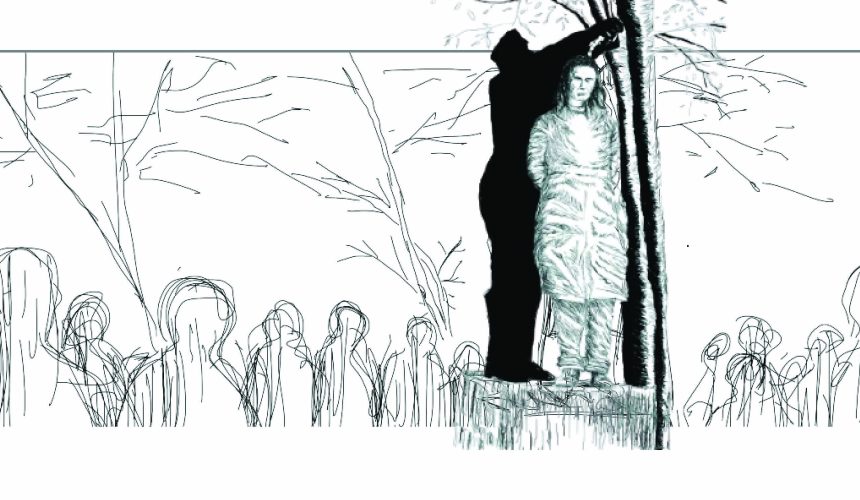
The Nazis mercilessly tortured her for three days, to extract information from her on the Partisan comrades’ names and whereabouts. She stubbornly refused. To disclose information and never relented. hey asked her the names of her commanders, who were involved in the Communist Party in Bosnia, and all about the plans of the Yugoslav resistance, but they got nothing. Eventually, they decided that she was a lost cause and sentenced her to death by public hanging.
Thus they sentenced her to death for shooting at Nazi soldiers. As they tied the noose around her neck, she cried out to the crowd:
“Long live the Communist Party, and partisans! Fight, people, for your freedom! Do not surrender to the evildoers! I will be killed, but there are those who will avenge me!”
The Nazi commander offered to spare her life if she disclosed the names of her Communist allies. Instead, she replied:
“I am not a traitor of my people. Those whom you are asking about will reveal themselves when they have succeeded in wiping out all you evildoers, to the last man.”
There they stood her up on a box, tied a rope around her neck, kicked the box out from under her, and witnessed her slowly being strangled to death over the next few minutes. The intent of the Waffen SS to broadcast to the dire consequences the people would face if it offered resistance to the Thousand Year Reich.
Lepa escalated courage and defiance to mythical heights, symbolising the metal and unbreakable spirit of a revolutionary, and how liberation struggle transpires a miraculous transformation or spirit within a person. enables Nazis executed Lepa Radić on February 8th, 1943. She was just 17. The Nazi report on her execution read: “The bandit girl, hanging in Bosanska Krupa, has shown unprecedented defiance.”
Lepa Svetozara Radić Homage
Lepa played a pivotal part in the Communist party upholding Yugoslavian Partisans as one of the most effective guerilla armies in the entire war. Lepa posthumously received the Order of the People’s Hero award, the nation’s second-highest military honour. 20 December 1951, for her role in the resistance movement against the Axis powers—becoming the youngest recipient at the time. Today, she continues to inspire those who stand up to tyranny.
Harsh Thakor is a freelance journalist Thanks information from Historic Mysteries in ‘Teenage hero of Yugoslavian Resistance ‘, ’All that’s Intersecting’ by John Kursoki and ’Writers Without Money’,