Aniruddha Poddar
The story we know goes like this: our modern world of security alerts, pre-emptive wars, and “terror lists” began on September 11, 2001. That day, we are told, was ground zero for the “War on Terror.” But this is a historical illusion, a compelling fiction that hides a much older truth. If we follow the paper trail of power back through the 20th century, we find its origins not in New York or Washington, but in the colonial offices of the British Empire. The legal and political concept of “terrorism” as we now confront it was not born from a single catastrophic attack, but was carefully engineered; first to control restive colonies, and later to police the empire’s own heartland. This is the story of how a tactic of imperial rule came home, and how its original targets still shape its focus today.
In the early 1900s, the British Empire was overstretched. World War I had drained its resources, and in India, the so-called “jewel in the crown”, a powerful wave of revolutionary nationalism was rising.
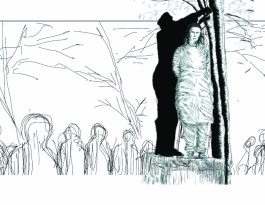
The empire’s response was not merely military; it was a legislative masterstroke designed to criminalise dissent itself. In 1919, the Imperial Legislative Council passed the Anarchical and Revolutionary Crimes Act, infamously known as the Rowlatt Act. This law was a blueprint for state overreach. It authorised indefinite detention without trial, suspended the right to a jury, and allowed for secret tribunals. The act’s vague definitions meant that any challenge to British authority could be deemed “anarchical.” “It was a law designed to produce fear, not to deliver justice,” writes historian A. G. Noorani in The Trial of Bhagat Singh. It transformed the colonial state into both judge and jailer. The legacy of this legal architecture is chillingly persistent. In 2019, the UK group Extinction Rebellion saw a protester detained for 21 months without trial, a direct descendant of the Rowlatt logic, proving that the tools forged in the colonies remain in the domestic toolkit.
A successful system of control is rarely used just once. As British authority in Ireland crumbled in the face of the Sinn Féin political movement and the guerrilla war of independence, London reached for its tried and tested colonial manual. The Restoration of Order in Ireland Act (1920) was, in essence, the Rowlatt Act for Europe. It copied its core features like internment without trial, military courts replacing civilian ones, and the suspension of inquests. The same notoriously brutal paramilitary unit, the “Black and Tans”, used to terrorise Irish communities, was later deployed by Churchill himself to suppress the Arab revolt in British Mandate Palestine. The empire was perfecting a portable system of repression. As scholar Nivi Manchanda argues in Imagining Afghanistan, the British imperial state consistently constructed rebellious populations as “savage” and “fanatical” to justify exceptional measures. This narrative was first applied to Indians, then the Irish, and later to Palestinians.
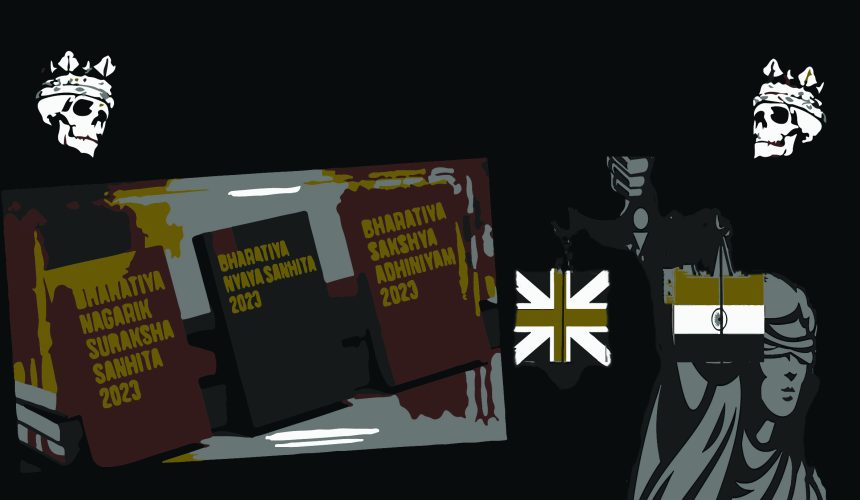
The bitter irony of this history is that the very state born from resisting the “terrorist” label has become one of its most prolific users. In contemporary India, the ruling Bharatiya Janata Party (BJP), empowered by its Hindutva ideology, has weaponised the colonial playbook. Laws with expansive definitions of “terror” and “sedition”, direct descendants of the Rowlatt-era framework like the Unlawful Activities (Prevention) Act (UAPA), are now deployed not against an imperial power, but against citizens. Journalists, students, activists, and intellectuals who question government policy, advocate for minority rights (particularly Adibasis, Muslims and other religious minorities), or highlight failures in governance are routinely branded “deshdrohis” (traitors) or “urban Naxals,” and charged under anti-terror statutes. This represents the ultimate perversion of the anti-colonial struggle.
The state now uses the master’s tools not to dismantle the old house of oppression, but to construct a new, majoritarian one within the same walls. The “terrorist” is no longer just the anti-colonial fighter, but anyone who challenges the homogenising narrative of the nation-state itself.
For decades, these “exceptional” laws were framed as colonial necessities, something for “over there.” That changed in 1974, when IRA bombings in Birmingham and Guildford brought the violence to English streets. The state’s response was to finally codify the “T-word” domestically. The Prevention of Terrorism (Temporary Provisions) Act 1974 was Britain’s first statute explicitly targeting “terrorism.” It introduced proscription, the official blacklisting of organisations and sweeping police powers of detention. For years, its primary target was singular, i.e. the Irish Republican Army (IRA).
The colonial subject, the “terrorist,” was now formally defined, and its face was that of the anti-colonial Irish fighter. This process culminated in the Terrorism Act 2000, the UK’s first permanent, comprehensive anti-terror law. But with the IRA threat diminished, the state needed a new primary antagonist. The “enemy within” was redefined, shifting from Irish republicanism to “Islamist extremism.” The vague, expansive language born in colonial India found a new target in Muslim communities. Today, the colonial logic of counter-terrorism demands a perpetual, racialised “Other.” Its engine is structural Islamophobia, and its key mechanism is conflation, deliberately muddling a militant group like Hamas with the entire Palestinian populace and their global solidarity movement.
The UK’s counter-terror strategy, CONTEST, and its Prevent duty, have been widely criticised by groups like Amnesty International and Liberty for casting a suspicious gaze over Muslim civic life.
This framework can label peaceful political activism as “extremism.” It is how an 83-year-old Christian reverend, Dr. Stephen Sizer, could be investigated for terrorism allegations for his views on Palestine. This brings us to the ugly, revealing slang that emerged online, i.e. “Paddystanian.” This slur, merging “Paddy” (a derogatory term for an Irish person) and “Palestinian,” is more than just hate speech. It is an unwitting admission of a historical truth. The British state recognises a shared lineage between those it once branded terrorists in Ireland and those it seeks to marginalise today for supporting Palestine. The “War on Terror” is not a 21st-century invention. It is a colonial project, refined over a century. It began as a legal framework to suppress Indian independence, was tested on the Irish, and has now been globalised and brought full circle to monitor citizens at home. The power to define “terrorism” has always been a political weapon, used to legitimise the surveillance and suppression of those who challenge state power. As we witness the term “terrorist” being applied to protestors, activists, and even elderly clergy, we are not seeing a new phenomenon. We are witnessing the latest chapter in a very old story, written long ago in the script of empire. Recognising this lineage is not just an academic exercise, it is the first step toward challenging a system that, from its inception, was designed to confuse justice with control.