by
Samir Karmakar
From the perspective of linguistic anthropology, languages are not merely neutral tools for communication but culturally embedded systems of meaning. Each language embodies a particular way of perceiving, categorizing, and inhabiting the world, shaped by the historical and social experiences of its speakers. Linguistic structures are inseparable from the historical and cultural contexts in which they emerge.
When such culturally specific languages are evaluated using a single, standardized questionnaire or analytical template, the result is often epistemic violence rather than neutral description. Concepts that are meaningful in one linguistic–cultural system are uncritically projected onto another, thereby distorting indigenous categories of thought. This practice risks altering the internal logic of the language itself, much like forcing an inappropriate measuring scale onto an object for which it was never designed.
A telling example is the concept of mangalsutra, an ornament that carries specific marital, religious, and gendered meanings in many Hindi-speaking communities. When a lexicographer, in the process of compiling a dictionary of a tribal language, insists that an informant provide an equivalent term for mangalsutra, the act constitutes a form of cultural and linguistic trespassing. The absence of such a term is not a lexical deficiency but an index of a different marital ideology and symbolic order. Insisting on equivalence imposes an external cultural logic and risks reshaping indigenous semantic fields.
Such practices contribute to linguistic hegemony, wherein dominant languages and cultures silently become the norm against which others are measured. Over time, this can lead to semantic displacement, cultural alienation, and ultimately language shift and language decay. The irony is particularly stark when these processes unfold under the aegis of state-sponsored institutions, which often claim to document and preserve linguistic diversity while inadvertently facilitating its erosion.
Despite the increasingly loud rhetoric of “decolonizing” linguistic attitudes articulated by government institutions engaged in language documentation and planning, the practices on the ground often reveal a stark contradiction. Rather than dismantling colonial epistemologies, these institutions frequently reproduce them in updated forms. Under the guise of nationalism and cultural integration, they continue to privilege dominant linguistic categories, measurement tools, and conceptual frameworks, thereby reinscribing hierarchies reminiscent of colonial rule.
The state does not merely inherit colonial linguistic infrastructures; it actively bears the torch for neo-colonial domination, even as it claims to oppose it. The language of decolonization becomes a performative slogan, while the actual work of documentation and standardization facilitates cultural homogenization and linguistic subordination. The threat to minority as well as regional languages today does not arise only from overt colonial forces, but also from nationalist projects that, in the name of unity and preservation, silently advance the agenda of the neo-colonizer.
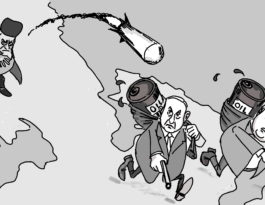
Illustration-Partha Chakraborty