

Kobad Ghandy
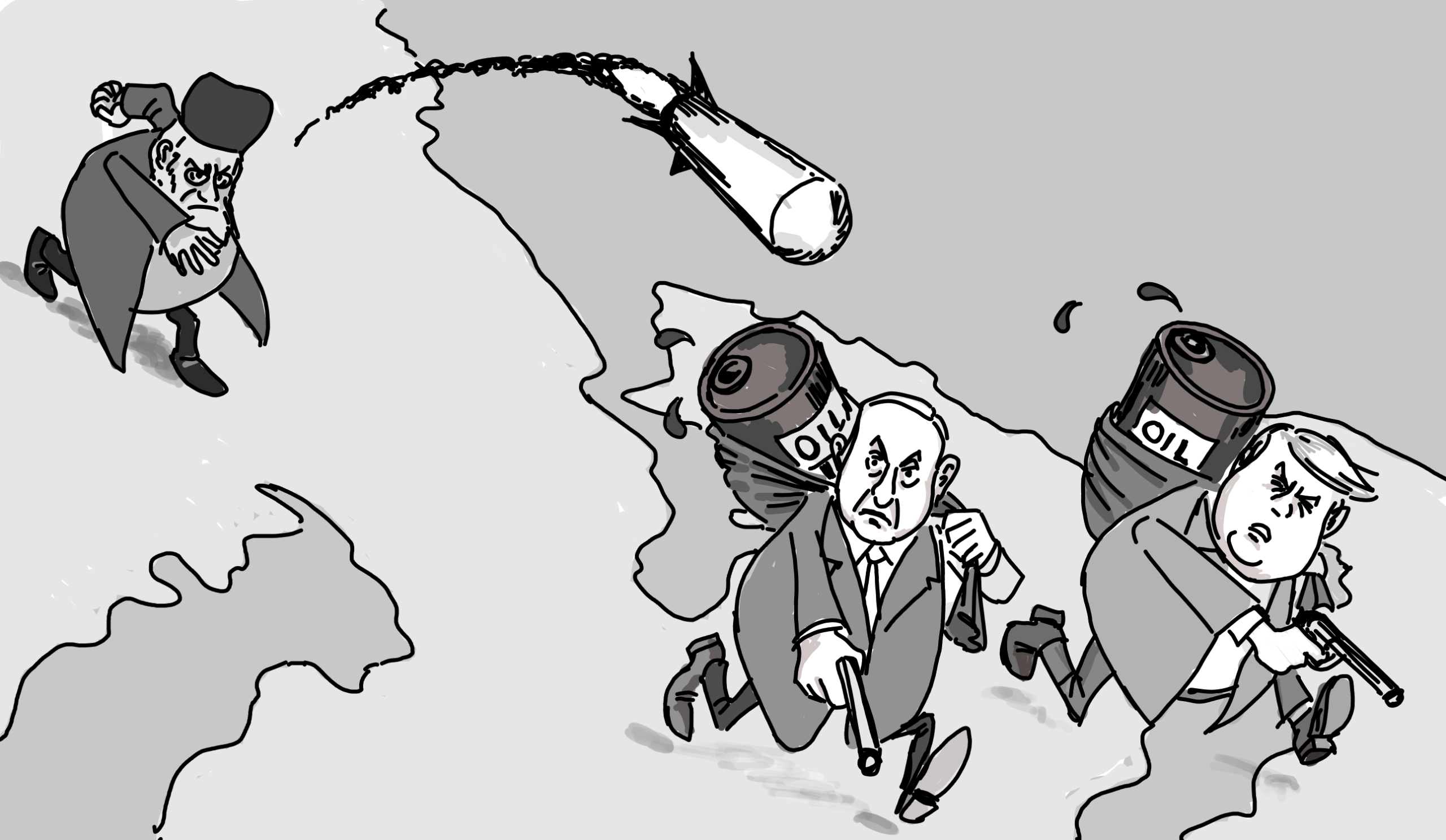
In an act of goondaism the US killed the head of state of Iran in his own house. Reminding one of the medieval ages and not 21st century. What is more terrifying is that this was after kidnapping the President of Venezuela and confining him in the US. All this being done as the world watches passively with little opposition even from the US’s two major contending powers – China and Russia, who meekly look on. This, even though China had huge investments in Venezuela. This whets the appetite of any bully. Unless a bully is beaten back, he tends to get more aggressive.
The world is no longer what it has been since the post-WWII scene. It is fast changing; and if we look at past history it is in such periods that is fraught with serious consequences, instability and wars.
It is the US that had dominated the world, ever since the decline of the British Empire, is now in a state of flux – not necessarily decline, as there is no other power to replace it. China is a strong contender, especially after it ceased to be socialist and turned to capitalism after Mao’s death. China, with a GDP of about $ 20 trillion to the US’s $ 30 trillion it is not, at present, seeking world hegemony. But this is a temporary situation of transition from a socialist economy into an imperialist one. China has a single military base abroad, in Djibouti, Africa; compared to the US’s 750 military bases in more than 80 countries.
Also, in 2024, the United States spent $997 billion on defence, which is more than the next nine countries’ spending combined. In comparison, China, which is the second biggest defence spender, spent $314 billion on military expenditures in 2024.
But the US is getting more and more isolated. Its arbitrary actions and even mocking of NATO, has left it alone on the world stage notwithstanding its size and military prowess. To date, the United States has provided Israel $174 billion (current, or non-inflation-adjusted, dollars) in bilateral assistance. The United States has been providing significant financial aid to Israel for decades, with American tax dollars making up a substantial portion of Israel’s annual budget. The current level of aid is approximately $3.8 billion per year. Isreal is one of the few countries that has compulsory conscription. As of 2022, the minimum required length of military service is two years and eight months (with some roles requiring an additional four months of service) for all conscripted men, and two years (with some roles requiring an additional eight months of service) for conscripted Jewish women. Once they have completed their mandatory term of service, all discharged citizens remain eligible to be called up for reserve duty until the age of 40. In other words it is a highly militarised society.
Worldwide military expenditure saw its steepest rise in 2024 since the end of the Cold War, reaching $2.7 trillion as wars and rising tensions drove up spending, researchers said. The high tech sector accounts for 17% of its GDP. Israeli tech companies recorded approximately $58.8 billion in mergers, acquisitions, and IPOs in 2025, a 340% jump from the prior year. A single deal drove much of that surge: Google’s $32 billion acquisition of cybersecurity firm Wiz. Government revenue from gas comes through royalties and a special levy on the super-profits of gas producers. The state earned an estimated $1.3 billion from gas revenues in 2024, and that figure is expected to roughly double in the coming years as production capacity expands and new export infrastructure comes online. Israel’s parliament has approved a 2026 state budget with a sharply higher defence allocation to fund the ongoing conflict with Iran, With the additional spending to be financed through increased borrowing and cuts in civilian expenditure, according to a report by Bloomberg. In other words the burden of the war has to be born by the Israeli people.
The budget, cleared by the Knesset totals the equivalent of $222 billion and sets a fiscal deficit target of 4.9% of GDP.
Israel receives more military aid from the US than any other country in the world.
A small country like Iran is able to challenge the US-Isreal Axis. Iranian military launched a fresh barrage of missiles against Israel as top diplomats from key regional powers are gathering in Pakistan soon to discuss how to end the fighting in West Asia as the war entered the second month. There were few signs of progress as Israel and the US kept up strikes on Iran, and Tehran responded by firing missiles and drones across the region. The ongoing war with Iran could cost Israel an estimated NIS 9.4 billion (USD 3 billion approximately) per week under current restrictions on economic activities, the Israeli Finance Ministry has warned.
Where does Israel get such vast sums of money if not from the US. Isreal has no raw material resources and no other source of income. The country obtained large amounts of capital, which included gifts from Jews around the world, reparations from the Federal Republic of Germany for Nazi crimes, grants-in-aid from the U.S. government, and capital brought in by immigrants. It is a fake artificial state created on Palestine land as an imperialist outpost against the Arab people of the region. It has a high-tech sector acting as an off shoot of the US. The ideology of the state is Zionism which is akin to Hindutva. As recently as Feb this year the United States Ambassador to Israel Mike Huckabee said that Israel has a biblical right to much of the Middle East stretching from the Euphrates River to the Nile, which would encompass Lebanon, Syria, Jordan and parts of Saudi Arabia. Is this same concept of Greater Isreal being pushed by the US. It is said it is the Zionist billionaires in the west who pour in billions to prop up the state of Isreal.
What about the Palestinian people who comprise 10 million people to Israel’s 1 million. They are being treated as second rate citizens in their own land. Of these 4 million live in the West Bank and Gaza Strip, 1.4 million live in Isreal; 3 million live in Jordan, roughly 4 lakhs live in Lebanon, Saudi & Syria each; another 4 lakhs spread across other Arab states, under 4 lakhs in the Americas and 3 lakhs in other countries.
In his work, Der Judenstaat (The Jewish State) published in 1896, Herzl articulated, for the firs time, the idea that Jews should establish their own state. Zionism, at its core, is a nationalist movement that emerged in the late 19th century with the goal of re-establishing a Jewish homeland in the historical region of Palestine. Efforts by Jews to establish a national state there began in the late 19th century. Britain supported Zionism and in 1923 assumed political responsibility for what was then called Palestine. Migration of Jews to this region, which increased during the period of Nazi persecution, led to deteriorating relations with Arabs. In 1947 the UN voted to partition the region into separate Jewish and Arab states. The State of Israel was proclaimed in 1948, and Egypt, Transjordan (later Jordan), Syria, Lebanon, and Iraq immediately declared war on it. Israel won that war, as the 1967 Six-Day War, in which it occupied the West Bank, Gaza Strip, Golan Heights, and east Jerusalem. Another war with its Arab neighbours followed in 1973, but the Camp David Accords led to a peace treaty between Israel and Egypt in 1979. Israel invaded Lebanon in 1982 to expel the Palestine Liberation Organization (PLO) from that country, and in late 1987 an uprising broke out among Palestinians of the occupied territories of the West Bank and Gaza Strip ( intifāḍah). Peace negotiations between Israel and the Arab states and Palestinians began in 1991. Israel and the PLO agreed in 1993 to a five-year plan to extend self-government to the Palestinians of the occupied territories. Israel signed a peace treaty with Jordan in 1994. Israeli soldiers and a Lebanese militia, Hezbollah, clashed throughout the 1990s. Israeli troops withdrew from Lebanon in 2000, and negotiations between Israel and the Palestinians broke down amid violence that claimed hundreds of lives. In an effort to stem the fighting, Israel in 2005 withdrew its soldiers and settlers from parts of the West Bank and from all of the Gaza Strip, which came under Palestinian control. In 2006 a Hezbollah operation against Israel resulted in a month-long war in Lebanon. The peace process between Israel and the Palestinians came to a near halt during most of the 2010s, and tension between Hamas, which took control of the Gaza Strip in 2007, and Israel escalated to open fighting several times between 2012 and 2021. Israel and Palestinian militants began a war on October 7, 2023, when Hamas launched an attack on Israel that killed more than 1,200 people, primarily Israeli citizens, making it the deadliest day for Israel.
Schwarz tells the story of the massacre perpetrated on May 23, 1948, in the Palestinian village of the same name, by the Alexandroni Brigade, an elite unit of the newly formed Israeli army. For the last two years, revelations have been mounting about the acts of violence and expulsions perpetrated by Jewish troops in 1948, when Israel was newly created. The Palestinians, who describe the episode as the Nakba, “catastrophe” in Arabic, are commemorating its 75th anniversary on May 15. On May 15, Palestinians will commemorate the anniversary of the Nakba, the ‘catastrophe,’ which was for them the 1948 creation of the state of Israel. Israeli documentarians are trying to record the violent acts perpetrated by Jewish troops.
So, for the Palestinians the creation of Isreal was a catastrophe but for the jews it as apparently a biblical restoration.
With this background, let us look at the world economy before coming to the rising conflict between these two major powers.
WORLD SCENARIO
As we go to the press the Iran-Isreal/US conflict is spiralling out of control. Why is the US intervening in a local middle east event? They thought Iran would not last more than a few days. It is now over one month and the war continues to rage, with Iran striking back from secret locations which the US have not been able to bomb.
(i) Global poverty index as of 2024 UNDP Report was 1.1 bn living in multidimensional poverty. Of these the largest number were in India – 234 million. NITI Ayog puts the figure at a mere 70 million.
(ii) China’s growth in the first quarter of this year, according to the National Bureau of Statistics GDP grew by 5.4 percent on the other hand the US economy contracted at 0.3% rate in Q1 – its first GDP decline in 3 years. According to WORLDOSTATS in PPP terms China’s GDP in 2025 was $ 35.3 trillion to the US’s $ 28.8 trillion; the size of the 27 member EU stands at $ 28 trillion in 2025. India’s GDP is comparatively less at $ 14.6 trillion. Japan was at $6.7 trillion and Germany’s GDP was much smaller at a mere $ 5.7 trillion.
(iii) According to the Human Development Index the 5 countries of India, Pakistan, Congo Nigeria account for about half the world’s poor of 1.1 bn people.
(iv) Worldwide only 18 people have a net worth of over $ 100 bn whose combined wealth is $3 trillion, nearly equal to India’s entire GDP of $4 trillion.
The size of these economies to an extent defines their relative strengths where we find the US and China towering above the others (given that the EU is not homogenous).
But it is not just the military or economic balance, other factors also play a role; while the US exercises muscle power, 78% of US military depends on Chinese rare earth minerals. In fact, as a threat, days before a Xi-Trump meeting China announced sweeping new export curbs on rare earth minerals and other essential items necessary for the US defence industry. Trump retaliated saying he will raise tariffs on China. China controls about 80% of the world rare earths and holds about half of it. Building an independent rare earth supply chain takes decades…. which America cannot do. China built this up from the early 1980s.
While the US was scaling down its operations in rare-earths, expecting to source it from elsewhere – like Greenland; China built-up low-cost production, not only in mining but in processing as well. Countries that even mine rare earths are sending them to China for processing. But, recent geological surveys have identified substantial deposits of neodymium, dysprosium, and other critical minerals essential for renewable energy technologies, electric vehicles, and modern electronics in Greenland. However, extracting these minerals from Greenland presents significant environmental and logistical challenges. Mining operations in the Arctic would face extreme weather conditions, fragile ecosystems, and substantial infrastructure requirements. Environmental groups express concerns about potential impacts on Greenland’s pristine wilderness and indigenous communities, while also acknowledging the paradox that these minerals are essential for renewable energy technologies designed to combat climate change. The discovery also carries geopolitical implications, as Greenland maintains autonomy under Danish sovereignty while the United States and other nations show increasing interest in Arctic resources.
Nations worldwide are engaged in an unprecedented competition to secure access to critical minerals and rare earth elements that have become the backbone of modern technology and the clean energy transition. These materials, including lithium, cobalt, nickel, and rare earth elements like neodymium and dysprosium, are essential components in everything…
China has stated that any country using any small amount of its rare earths will need an export licence. This hurts the US most, as its military industrial complex depends on these minerals. China is tightening its grip on this which is an essential component from EVs, to missile production components. In addition, it is widening the scope to include not just rare earths, but lithium-ion batteries, graphite and synthetic diamonds – all items needed in these new age industries.
A report found that US dependency on China’s rare earths is staggering —- 78%; and cuts across all the branches of the US armed forces: the US navy depends 92% on these minerals; the air force, miliary and even the marine corps are dependent on these minerals.
It is in this scenario that we must view the rise of BRICS and de-dollarisation.
Rise of BRICS & De-dollarisation :
Before 2020 the total GDP of the G7 was larger than BRICS; now G7 is 29% of global production while BRICS is 33%.
The US continued domination since WII is gradually shifting. WWII eliminated opposition from other western countries – Germany , Japan, Britain, Russia. US, not being part of the war suffered the least. The British Empire dominated for about hundred years, fought numerous wars to sustain it. Collapsed after World War II.. The Second World War accelerated a chain of events that would see countries withdrawing from the empire and fighting for independence from colonial rule. Within a few decades, the British Empire would completely collapse. The Second World War accelerated a chain of events that would see countries withdrawing from the empire and fighting for independence from colonial rule.
Now the US is facing a similar situation. It lost many wars – Vietnam, Korea Iraq etc; it is overstretched. The U.S. military operates approximately 750 overseas bases in over 80 countries and territories, maintaining the world’s largest foreign military presence. Major concentrations are in Japan (120+), Germany (119), and South Korea (73), serving as strategic hubs for power projection,
The US has finally accepted that the BRICs block is a major threat and likened the BRICS to terror. The Hassan Institute produced a report “How to counter BRICS and preserve global dominance”. BRICS’s creation of the NEW DEVELOPMENT BANK has frightened the dollar domination and pushed further weaponisation of the dollar.
The BRICS financial agenda focussed on promoting non-dollar trade – this is being equated to terror. Hudson recommends to Washington to counter the rise of BRICS through aggression: it says, the US will need to double down on those policies that began to erode its global dominance in the first place. Washington’s sought to act on the withdrawal from SWIFT (payment system) with sanctions on Iran in 2012 and Russia in 2022 but to little impact due to an alternative world market in Asia, Africa and parts of Latin America.
Hudson suggests that anyone who seeks to bypass SWIFT MUST be excluded from dollar denominated transactions and lose access to SWIFT. Its second recommendation was to strengthen oversight of stable coin[i]. Finally, Hudson believes that the US must apply sustained economic and diplomatic pressure on BRICS.
FAILURE OF US SANCIONS & DECLINE OF THE US
Statistics show that sanctions killed nearly 38 million people since the 1970s. But today weaponisation of the $ only pushes countries to the opposition bloc as they have an alternative, not available earlier.
In addition, the US dollar is down 11% this year – indicating growing loss of confidence in the $.
What does all this indicate?
First, is the decline of US dominance which has existed in the world since WWII. It is down but not out!!!
Second, the rise of the BRICS bloc and particularly China. Unlike the earlier rising imperialist power, Germany, prior to the two world wars, China, as yet, seeks not confrontation, but gradual economic growth capturing world markets.
In fact, if pushed to the wall, it is the US that will push the world to a disastrous World War III. With the world aflush with nuclear weapons this will be disastrous as it can result in a holocaust wiping out much of the world.
The Cost of War
These political tensions are reinforced by the financial burden of the conflict. According to reporting cited by CNBC, the U.S. military expended approximately $5.6 billion in munitions during the first two days of the war. Analysts at the Center for Strategic and International Studies estimate that the conflict is costing roughly $891 million per day.
Iran’s military response to the conflict reflects a doctrine that has been developing for more than two decades. Known as “mosaic defence,” the strategy is based on the assumption that Iran cannot match the United States or Israel in conventional military power. Instead, Iranian planners have focused on building a system capable of surviving the initial shock of a major military assault.
The doctrine emphasizes decentralization and redundancy. Rather than concentrating authority in a single command structure that could be eliminated through targeted strikes, Iran has distributed command responsibilities across multiple regional and institutional layers. The Islamic Revolutionary Guard Corps (IRGC), the regular army, Basij militia units, missile forces, and provincial command structures all form components of a dispersed defensive network.
The most immediate global consequence of the war has been the disruption of energy markets. The Strait of Hormuz, one of the most critical maritime chokepoints in the world economy, has become the focal point of strategic tension. Approximately 20 percent of the world’s oil supply normally passes through this narrow waterway connecting the Persian Gulf to the Indian Ocean. Straits of Hormuz.
ONGOING QUESTION OF IRAN-US CONFLICT
The conflict has also produced immediate economic consequences. Shipping through the Strait of Hormuz — the maritime chokepoint through which roughly one-fifth of the world’s oil supply normally passes — has been severely disrupted. Oil prices surged above $120 per barrel during the first phase of the war, triggering volatility across global financial markets and raising concerns about the broader economic impact of prolonged instability in the Gulf.
Statements from senior defence officials reinforce the possibility that the war could still intensify significantly. U.S. Defence Secretary Pete Hegseth has indicated that the most powerful phase of the campaign may still lie ahead, involving expanded air operations and the use of heavier conventional munitions against Iranian military infrastructure.
As of late March 20th, there were massive anti-war protests in Chicago. The protests began almost immediately after reports of a coordinated U.S.-Israeli attack on Iran. “No Kings” protests have erupted across the U.S. and Europe, opposing a U.S.-Israel military attack on Iran initiated by President Donald Trump. Millions are demonstrating, with over 3,100 events registered in all 50 states. Protesters are calling for de-escalation, criticizing aggressive actions by the administration. Organizers claim this could be one of the largest demonstrations in U.S. history, with millions expected to participate nationwide.
INDIA AND THE WEST ASIA CONFLICT
Just a few days before the attacks on Iran, Modi was in Isreal. In fact totally bowed to US pressure when he was old not to buy oil from Russia though it is far cheaper. When few other countries would not be seen with Isreal, Modi, defacto, sought to give legitimacy to the Zionist regime. Instead of focusing on the pathetic conditions here Modi 56 inch chest is displayed abroad while our people suffer. Even to this day, in the Global Hunger Index India ranks 108th out of 127 countries listed. Undernourishment was 14%, Child stunting 36% and wasting 19%. And though such poverty continues to stalk the masses, the number of billionaires grew from 249 in 2024 to 284 in 2025 – i.e. in just a single year. And in India’s rich list total wealth of India’s 100 billionaires was $1.1 trillion according to Forbes of which in 2024 Ambani wealth was $ 120 bn to Adani’s $ 116 bn. At third place was Savitri Jindal with $ 44 bn. And this is only the officially stated figure; if the black money was included the figure would probably be three times this. As reported in the Deccan Chronicle, a recent report indicated that India now has fifty-seven new billionaires in the fiscal year 2025-2026, taking the total number of billionaires to 308. The total wealth combined for Indian billionaires rose to approximately to 112.6 trillion rupees.
India’s GDP was Rs 188 trillion. In other words, the billionaire wealth was 60% of the entire Indian GDP.
SERVILE INDIAN RULERS
The Indian rulers, from the times of Nehru, have the art of pretending playing both sides; but in reality, being servile to all, not standing up to any of them. India’s Modi government agreed to stop buying oil from Russia and buying from the US when threatened by Trump’s higher tariffs. Trump said he would reduce trade tariffs on Indian goods from 50 to 18 percent after New Delhi agreed to stop buying Russian oil. Modi meekly agreed. India has agreed to buy petroleum, defence goods, and aircraft from the U.S., while partly opening up its highly-guarded agriculture sector under a trade deal
with the US. The Indian government official, who did not want to be named, said India has agreed to buy U.S. goods including telecom and pharmaceuticals and offered market access for some agricultural products, as part of New Delhi’s commitments under the deal.
Trump signalled that India will start buying crude oil from Venezuela as part of a trade deal under which tariffs have been cut from 50% to 18%.
Cowing before the mighty imperialists and allowing the loot of our country while crushing our own people with an iron fist. The present dispensation has perfected this art – using Hindutva as a tool of fake patriotism/nationalism, while selling our country to the highest bidder; and the organisational clout of the RSS to prevent the rise of any dissent. Not a paisa of the huge foreign drain of over Rs. 2000 crore each year is restricted in any way by any of the parties in power. Nor do the RSS open their mouths against it; on the contrary they seek to divert genuine patriotism (anti-imperialism, of which the first task is to restrict the foreign drain)
TASKS BEFORE THE WORLD PEOPLE
Under such circumstances the main task of the world people is to stand up against US imperialism and all their running dogs; expose the alternative imperialist economic bloc, particularly China (tearing off its fake socialist mask); and unite all forces in India and abroad to target US imperialism and their allies everywhere against hegemony and war.
Picture: Partha Chakraborty